Have you ever been reading a text or article and stumbled across the word “antonym” and thought, “Wait… what does that even mean?”
I remember the first time I saw it I was scrolling through a friend’s message about studying vocabulary, and I froze.
It sounded complicated, but it’s actually super simple once you know the trick!
Quick Answer:
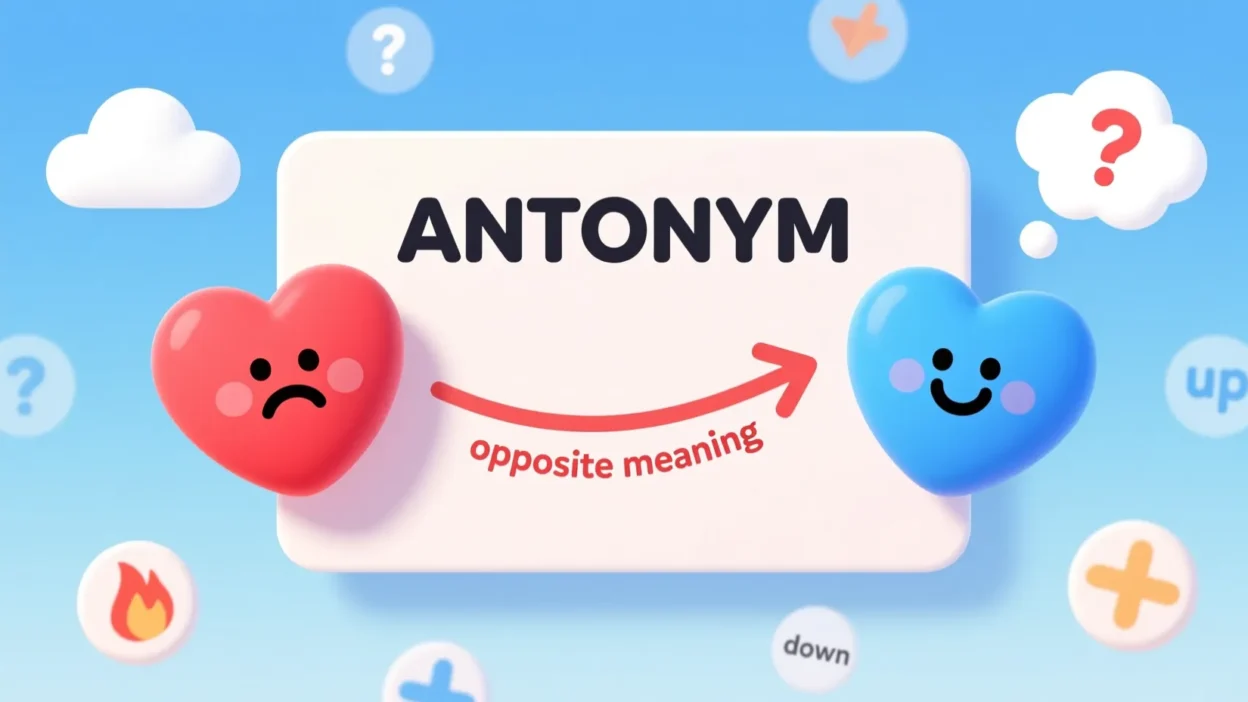
An antonym means a word that has the opposite meaning of another word. It’s a straightforward, friendly way of talking about opposites in language.
What Does Antonym Mean in Text? 🧠
In plain terms, an antonym is just the “opposite word.” For example:
- Hot ↔ Cold
- Happy ↔ Sad
- Fast ↔ Slow
You can use it in texting or social media when discussing words, learning vocabulary, or even joking around with friends about opposites.
In short:
Antonym = Opposite Word = Word with the opposite meaning of another word
Where Is Antonym Commonly Used? 📱
Antonyms pop up in various contexts, both online and offline:
- 📝 Textbooks & Educational Apps – Learning new words and vocabulary.
- 💬 Texting & Group Chats – Especially when joking about opposites or making puns.
- 🎮 Gaming Chats – Sometimes used in quizzes or word games.
- 📱 Social Media (TikTok, Instagram, Threads) – Language challenges, word-of-the-day posts.
Tone: Mostly casual or educational, rarely formal. It’s perfect for friendly conversations or study-related content.
Examples of Antonym in Conversation 💬
Here are 5 realistic examples of how “antonym” might show up in chats:
A: “Do you know the antonym of ‘big’?”
B: “yep, it’s ‘small’ 😎”
A: “i hate quizzes 😩”
B: “same, but antonyms are kinda fun lol”
A: “what’s the antonym of ‘night’?”
B: “day duh 🌞”
A: “my vocab teacher loves antonyms 😅”
B: “lol mine too, it’s opposites day every week”
A: “fast antonym?”
B: “slow ofc 🐢”
When to Use and When Not to Use Antonym 🕓
✅ When to Use:
- Friendly chats about language or vocabulary
- Casual social media posts or challenges
- Study groups and learning contexts
- Word games or quizzes
❌ When Not to Use:
- Formal business emails
- Urgent or professional discussions
- Legal, medical, or serious communications
📊 Usage Comparison Table
| Context | Example Phrase | Why It Works |
|---|---|---|
| Friend Chat | “Can you guess the antonym? 😄” | Casual & friendly |
| Work Chat | “Please review the opposite terms.” | Polite & professional |
| “Attached is the list of antonyms for review.” | Formal & clear |
Similar Slang Words or Alternatives 🔄
Here are some similar or related words you might see:
| Word | Meaning | When to Use |
|---|---|---|
| Opposite | Direct opposite of something | Casual & formal, broad use |
| Reverse | Turned backward or opposite | Casual, descriptive |
| Contrary | Opposite in nature or meaning | Formal writing or discussion |
| Antithesis | Exact opposite, often literary | Academic or sophisticated context |
FAQs:
Q1: Is “antonym” the same as “opposite”?
Yes! “Antonym” is the formal term for a word that is the opposite of another word.
Q2: Can I use antonyms in casual texting?
Absolutely! Friends often use antonyms when joking, playing word games, or explaining meanings.
Q3: Are antonyms only for adjectives?
Nope! Antonyms can be nouns, verbs, and adjectives any word that has a direct opposite.
Q4: Is antonym a difficult word to learn?
Not at all. Once you understand it means “opposite word,” it’s easy to recognize and use.
Conclusion:
Understanding what antonym means is simple but super useful. Whether you’re texting friends, making a TikTok about words, or brushing up your vocabulary, knowing antonyms helps you communicate clearly and creatively.
Remember: an antonym = opposite word easy, friendly, and totally relatable.
Start spotting them in chats and posts, and you’ll notice how much fun learning opposites can be!