You might have seen people debating Halloween online or heard someone say, “Halloween isn’t biblical,” and felt a bit confused.
Some celebrate it for fun and costumes, while others avoid it for religious reasons.
If you’ve ever wondered what Halloween actually means from a biblical perspective, you’re not alone.
Many people search this topic to understand whether Halloween has any connection to the Bible, Christianity, or scripture-based teachings.
Quick Answer:
Halloween does not appear directly in the Bible. It’s a cultural and historical observance, not a biblical command or Christian holiday.
Christians interpret it differently based on beliefs, traditions, and conscience.
🧠 What Does Halloween Mean in the Bible?
The word Halloween is not found in the Bible. There is no verse that commands people to celebrate it or forbids it by name.
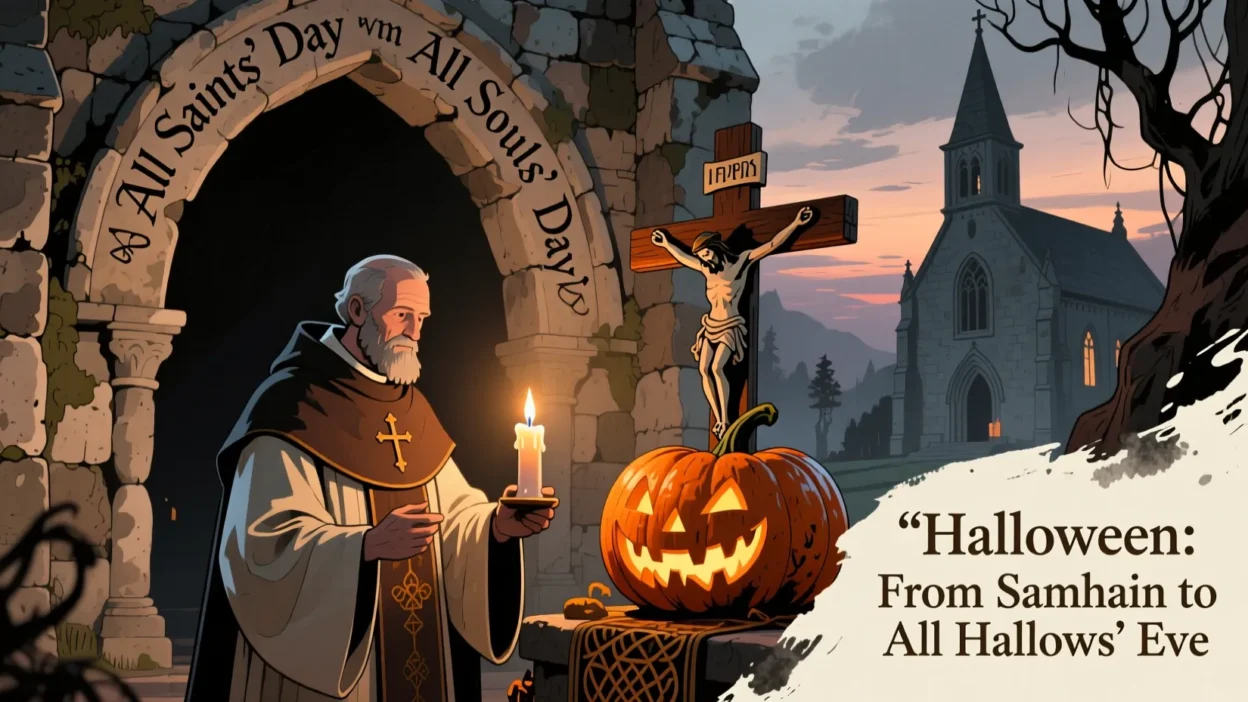
Historically, Halloween comes from “All Hallows’ Eve”, meaning the evening before All Saints’ Day (November 1), a Christian observance honoring saints.
Over time, it also absorbed elements from ancient Celtic festivals, especially Samhain, which marked the end of harvest and the start of winter.
From a biblical standpoint:
- The Bible emphasizes avoiding practices tied to occult, witchcraft, or spirit communication (e.g., Deuteronomy 18:10–12).
- Scripture focuses more on intent and behavior than on the name of a day.
Example explanation:
A Christian might say, “The Bible doesn’t mention Halloween, but it does tell us to avoid darkness and practice discernment.”
In short: Halloween ≠ biblical holiday ≠ sinful by name interpretation depends on beliefs, actions, and intent.
📱 Where Is the Topic of Halloween Commonly Discussed?
This topic is widely discussed in both religious and social spaces, especially during October.
Common places you’ll see it discussed:
- 📖 Church sermons & Bible study groups
- 💬 Christian blogs and forums
- 📱 TikTok & YouTube (Christian creators)
- 🧵 Reddit theology discussions
- 📘 Facebook groups and comments
Tone & context:
- Mostly religious and moral, not slang-based
- Often serious or reflective, sometimes debated
- Not casual texting slang, but a belief-based topic
💬 Examples of Halloween Discussions in Conversation
Here’s how people realistically talk about Halloween and the Bible online or in chats:
A: do you think halloween is against the bible?
B: it’s not mentioned directly, but some verses warn about occult stuff 🤔
A: our church doesn’t celebrate halloween
B: yeah same, they focus more on light vs darkness
A: is halloween a christian holiday?
B: not really, it’s more cultural than biblical
A: i just let my kids dress up, no spooky stuff
B: that makes sense, intent matters 🙌
A: bible says anything about halloween?
B: nope, but it talks about avoiding witchcraft
🕓 When to Engage With Halloween and When Not To (Biblical View)
Different Christians apply biblical principles differently. Here’s a balanced breakdown:
✅ When Some Christians Feel It’s Okay
- Family-friendly activities (costumes, candy)
- No focus on ghosts, demons, or occult themes
- Cultural participation without spiritual meaning
- Using it as a time for community or outreach
❌ When Christians Choose to Avoid It
- If it conflicts with personal faith or conscience
- If activities glorify darkness, fear, or evil
- If it involves occult symbols or practices
- If it causes spiritual discomfort
📊 Context Comparison Table
| Context | Example Phrase | Why It Works |
|---|---|---|
| Family Talk | “We keep it light and fun.” | Focuses on intent |
| Church Setting | “We don’t observe Halloween.” | Respects beliefs |
| Work Chat | “Enjoy the holiday!” | Neutral & polite |
| Social Media | “Celebrating safely 🎃” | Cultural, not religious |
🔄 Similar Religious Concepts or Alternatives
Instead of Halloween, many Christians focus on alternatives that align more closely with biblical values.
| Term | Meaning | When It’s Used |
|---|---|---|
| All Saints’ Day | Honors Christian saints | Liturgical churches |
| Harvest Festival | Celebration of harvest | Church events |
| Reformation Day | Marks Protestant Reformation | Oct 31 (historical) |
| Light Night | Christian alternative event | Churches & youth groups |
| Fall Festival | Seasonal, non-spiritual | Family-friendly settings |
❓ FAQs:
Q1: Is Halloween mentioned anywhere in the Bible?
No. The Bible does not mention Halloween by name.
Q2: Does the Bible forbid Halloween?
Not directly. However, it warns against witchcraft, sorcery, and communicating with spirits.
Q3: Is Halloween a Christian holiday?
No. It has mixed historical roots both Christian and pagan but it is not a biblical holiday.
Q4: Why do some Christians avoid Halloween?
Because of its associations with darkness, fear, and occult symbolism, which conflict with biblical teachings.
Q5: Can Christians celebrate Halloween?
Some do, focusing on harmless fun. Others choose not to. The Bible emphasizes personal conviction (Romans 14).
✅ Conclusion:
So, what does Halloween mean in the Bible? Simply put, Halloween has no direct biblical meaning.
It’s not commanded, named, or celebrated in Scripture. Instead, the Bible offers guiding principles about light versus darkness, personal conscience, and avoiding practices tied to evil or occult beliefs.
That’s why Christians view Halloween differently some participate cautiously, others abstain entirely.
Ultimately, the biblical focus is not the date itself, but the intent, actions, and spiritual impact behind how it’s observed.
Understanding this helps you make informed, faith-based choices without confusion or fear. 🎃📖