
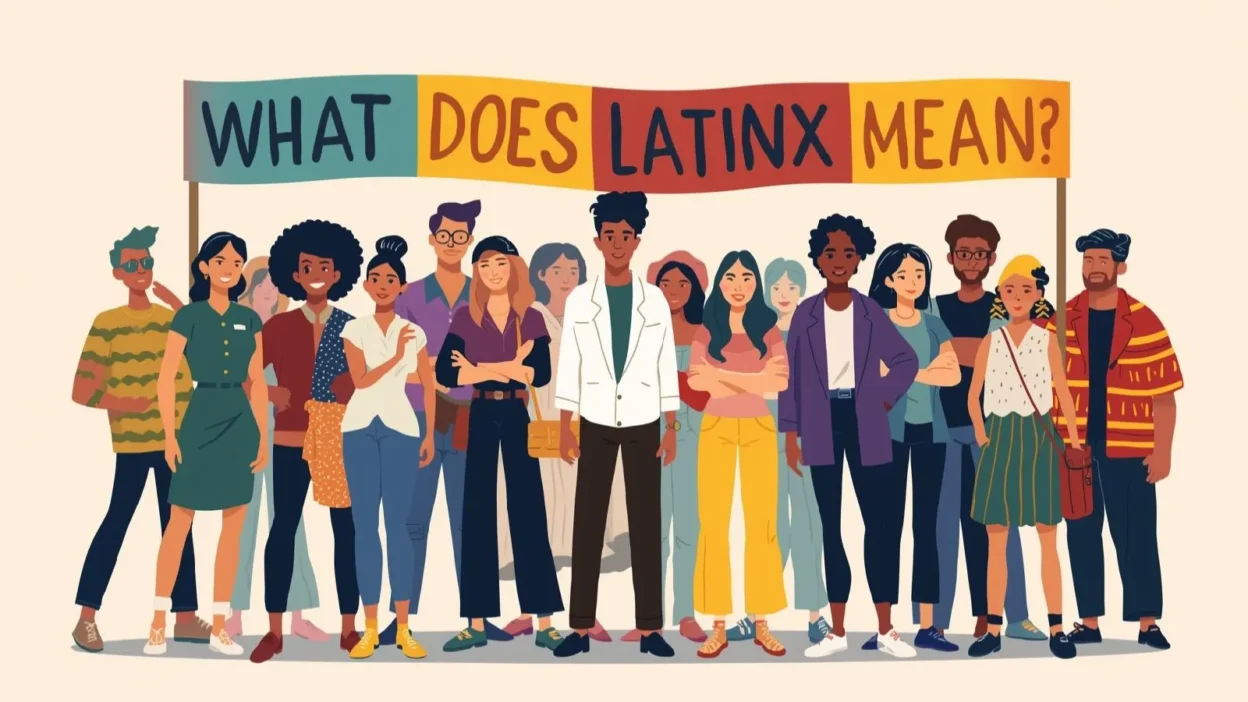
Have you ever been scrolling through TikTok or Twitter and suddenly saw someone use the term Latinx? At first, it might have felt confusing. “Wait… is that a typo? A new app? Or something political?” You’re not alone.
Many people first encounter this term online and aren’t sure what it really means or when to use it.
Quick Answer:
Latinx means “a gender-neutral term for Latino or Latina.” It’s a friendly and inclusive way of referring to people of Latin American heritage without assuming gender.
What Does Latinx Mean in Text? 🧠
Latinx is used to include all genders when talking about someone from Latin American backgrounds. Traditionally, Spanish uses Latino (male) or Latina (female). Latinx replaces those endings with an “x” to be inclusive of non-binary and gender-nonconforming people.
Example sentence:
“Our new club is for Latinx students only! 🌟”
In short: Latinx = Gender-neutral term for Latino/Latina = Inclusive way to refer to Latin American people.
Where Is Latinx Commonly Used? 📱
This term is especially popular online and in social discussions about inclusivity. You’ll often see it in:
- ✨ Twitter/X – tweets about culture and identity
- 🎥 TikTok & Instagram – hashtags and captions
- 💬 Texting – casual chats among friends discussing culture
- 📰 Articles & Blogs – more formal usage
- 🏫 University contexts – clubs, events, and programs
Tone: Generally casual, social-media friendly, and inclusive. Not usually used in very formal or legal documents.
Examples of Latinx in Conversation 💬
Here are some realistic texting examples:
Example 1
A: “Are you going to the cultural fair?”
B: “Yes! Can’t wait to meet other Latinx students 😄”
Example 2
A: “Our club is looking for volunteers.”
B: “Cool! I’m Latinx, so I can help 🙌”
When to Use and When Not to Use Latinx 🕓
✅ When to Use:
- Friendly, inclusive conversations 🌟
- Social media posts about Latin American culture
- Academic or community events
- Casual texts discussing identity
❌ When Not to Use:
- Formal contracts or legal documents
- Situations requiring gender-specific language
- When someone prefers Latino/Latina
Comparison Table:
| Context | Example Phrase | Why It Works |
| Friend Chat | “Can’t wait to meet more Latinx ppl 😄” | Casual & friendly |
| Work Chat | “The Latinx initiative team will review your proposal” | Professional & inclusive |
| “Please join our Latinx-focused event” | Formal & clear |
Similar Slang Words or Alternatives 🔄
| Slang | Meaning | When to Use |
| Latino/a | Male/female Latin American | Traditional, gender-specific |
| Chicano/a | US-based Mexican heritage | Cultural discussions |
| Hispanic | Spanish-speaking background | Formal, broad demographic |
| Latin American | People from Latin America | Neutral & formal |
FAQs:
Q: Is Latinx the same as Latino/a?
A: Not exactly. Latinx is gender-neutral, while Latino/a specifies male or female.
Q: Can I use Latinx in all situations?
A: It’s best in casual, social, or inclusive contexts. Avoid in formal legal writing unless appropriate.
Q: Is Latinx widely accepted?
A: Usage is growing, especially in academic, activist, and online spaces, but some prefer Latino or Latina.
Q: How do you pronounce Latinx?
A: It’s commonly pronounced “La-teen-ex” in English.
Q: Why use Latinx instead of Latino/a?
A: It’s a way to respect gender diversity and be inclusive of non-binary individuals.
Conclusion:
Latinx is more than just a trendy term; it’s a friendly, inclusive way to talk about people of Latin American heritage without assuming gender.
Perfect for social media, texting, or casual conversations, it signals awareness and respect for diversity.
While some still prefer Latino or Latina, Latinx is here to stay in inclusive communities and online discussions.
Next time you see it in a TikTok comment, Twitter post, or group chat, you’ll know exactly what it means and how to use it confidently.