I still remember the first time someone replied to me with “sh” in a group chat. I stared at my phone wondering, “Are they telling me to be quiet?
Is this an abbreviation? Did they mistype something?” Like most internet slang, it looked simple but felt confusing — especially because it shows up everywhere on TikTok, Snapchat, and text messages.
If you’re having the same “Wait… what?” moment, don’t worry — you’re not alone.
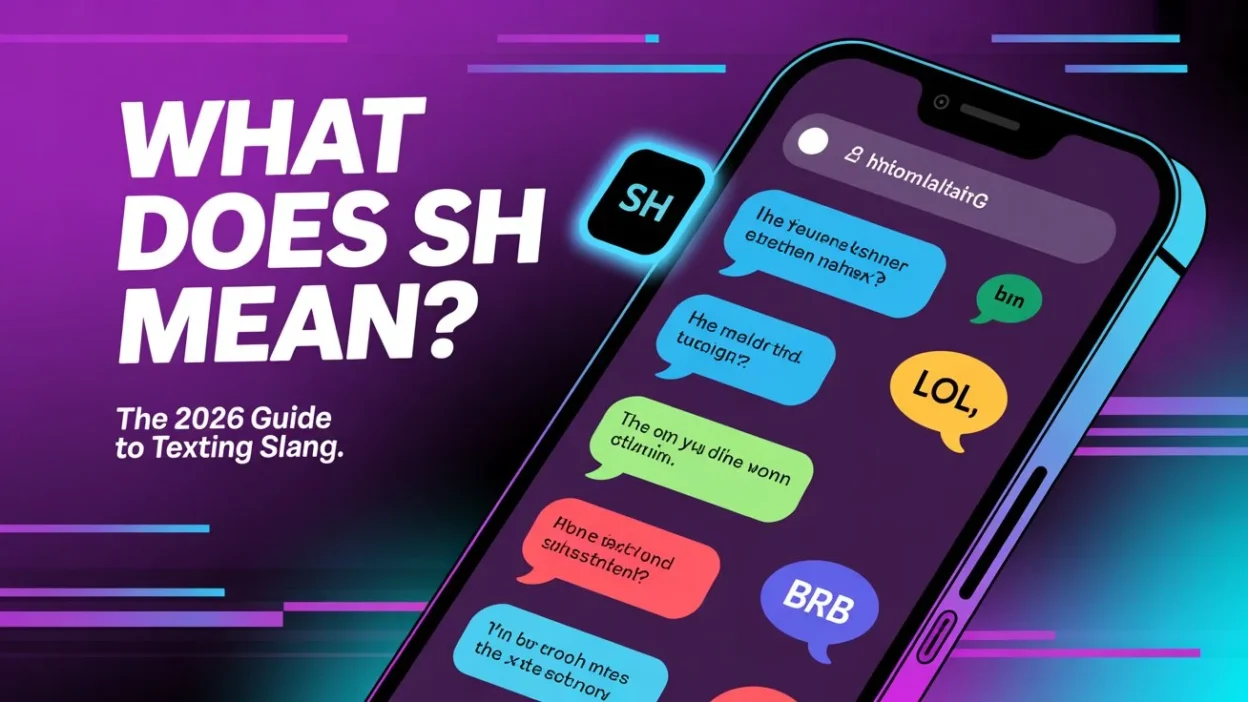
Quick Answer: SH means “same here.”
It’s a casual, friendly, and quick way of saying you feel the same way or share the same opinion.
🧠 What Does SH Mean in Text?
SH stands for “same here.”
People use it when they want to agree with someone or express that they have the same thought, feeling, or experience — but don’t want to type the whole phrase.
It’s short, simple, and super common in fast texting.
Example:
A: “ugh i’m so tired today.”
B: “sh 😩”
In short:
SH = Same Here = I feel the same / Me too.
📱 Where Is SH Commonly Used?
You’ll see SH mostly in casual digital conversations, especially where quick replies matter.
Here’s where it pops up the most:
- Snapchat 👻 — for quick responses to snaps or stories
- Instagram DMs 📩 — agreeing or showing you relate
- TikTok comments 🎵 — reacting to relatable videos
- Texting / WhatsApp 💬 — everyday chats
- Discord & gaming chats 🎮 — fast-paced messaging
Tone:
✔ Casual
✔ Friendly
✔ Social-media friendly
❌ Not professional
❌ Not formal
💬 Examples of SH in Conversation
Here are realistic texting examples showing how SH is used in real conversations:
1
A: “i could sleep for 10 hours straight lol”
B: “sh fr 😴”
2
A: “i miss summer already”
B: “sh 😩”
3
A: “bro school tomorrow…”
B: “sh 😭😭”
4
A: “i’m craving pizza”
B: “sh lol”
5
A: “i’m not in the mood to go out tonight”
B: “sh same”
6
A: “this weather is depressing”
B: “sh fr”
7
A: “why am i always tired”
B: “sh idk either 😭”
These examples show how natural and quick SH feels in casual chats.
🕓 When to Use and When Not to Use SH
✅ When to Use SH
Use SH when you want to express agreement or relate to something in a friendly, casual way:
- With friends
- In group chats
- While reacting to someone’s mood
- When texting quickly
- In memes or comment sections
- When you want a short, relatable reply
❌ When NOT to Use SH
Avoid SH in serious or professional situations:
- Work emails
- School assignments
- Speaking to older relatives (who may not know slang)
- Emergency or urgent situations
- When clarity is important
Comparison Table
| Context | Example Phrase | Why It Works |
|---|---|---|
| Friend Chat | “sh 😄” | Casual, quick, friendly |
| Work Chat | “Same here.” | Clear & professional |
| “I feel the same way regarding this matter.” | Formal & appropriate | |
| Serious Talk | “I understand how you feel.” | Clear, empathetic, not slang |
🔄 Similar Slang Words or Alternatives
Here are some slang alternatives that mean something similar to SH (same here):
| Slang | Meaning | When to Use |
|---|---|---|
| FR | For real | When you strongly agree |
| Same | Same here | Casual agreement |
| Me too | I feel the same | Friendly, clearer than slang |
| Bet | I agree / okay | Casual, confident tone |
| Facts | That’s true | When something is relatable or accurate |
| I feel that | I relate | When you want a bit more emotional expression |
❓ FAQs:
1. Does SH always mean “same here”?
Mostly yes, especially in texting. Very rarely it can mean “shhh” (be quiet), but context makes it obvious.
2. Is SH flirty?
It can be flirty depending on the context, tone, and emoji used — especially if you’re agreeing with something personal.
Example: “i miss you” → “sh 😳”
3. Is SH rude?
No — it’s casual and friendly. But if the conversation is serious, it might feel too short or dismissive.
4. Can I use SH in school or work?
Only in casual chats with friends or classmates. Not in formal communication.
5. What does SH mean on Instagram or TikTok?
Exactly the same: “same here.”
6. How do I know if someone means “be quiet” instead of “same here”?
Check tone and context:
- If someone says “sh!” alone: they mean quiet.
- If someone is agreeing to something: they mean “same here.”