Ever scrolled through social media, watched a meme, or read a post and thought, “Wait… is this person serious or just joking?” That’s exactly how I felt the first time I encountered something labeled “satire.”
I remember rereading a tweet three times trying to figure out if it was news, comedy, or a clever roast. Spoiler: it was satire — and it completely changed how I read online content.
Quick Answer:
Satire means “humorous, exaggerated, or ironic content meant to criticize or highlight issues.” It’s a playful yet pointed way of making fun of real situations, behaviors, or topics.
🧠 What Does Satire Mean in Text?
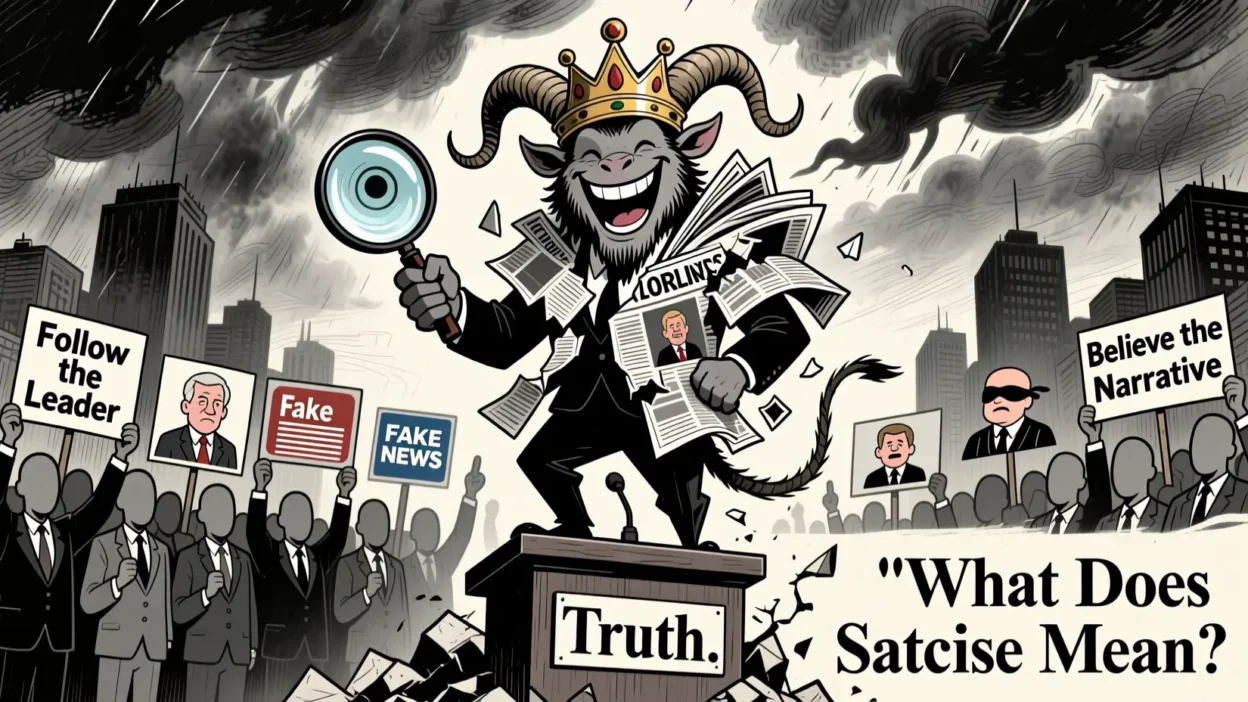
Satire refers to a style of writing or content that uses humor, irony, sarcasm, or exaggeration to point out flaws in people, society, politics, or culture. It’s not meant to be taken literally — the goal is to make you laugh and think at the same time.
Simple example:
“Breaking news: students shocked to discover homework doesn’t magically do itself.”
→ That’s satire because it exaggerates reality to make a point.
In short: Satire = humorous criticism = jokes with a message.
📱 Where Is “Satire” Commonly Used?
You’ll most often see “satire” on platforms where people create funny or sarcastic content. It appears as labels, hashtags, disclaimers, or descriptions.
Common places you’ll see satire:
- 📌 Twitter/X — political jokes, parody accounts
- 😂 TikTok — skits, exaggerated trends
- 📷 Instagram — meme pages, reels, social commentary
- 📺 YouTube — comedy sketches, parody news
- 💬 Texting — when someone explains “it’s satire” to avoid confusion
- 📰 Satire websites — like parody news or fake headlines
Tone:
Satire is always casual, funny, creative, and never formal.
💬 Examples of “Satire” in Conversation
Here are relatable chat-style examples:
1.
A: bro did you see that fake news video?
B: 😂 it’s satire, they’re just joking
2.
A: this meme is wild
B: it’s satire about school life lol
3.
A: is this real?
B: nahhh it’s satire, don’t take it seriously 😭
4.
A: i thought that post was legit
B: same 😂 then i realized it’s satire
5.
A: this guy roasted politicians hard
B: that whole channel is satire 💀
6.
A: why did they exaggerate so much?
B: bc it’s satire, that’s the point
7.
A: the headline confused me
B: it’s satire, it’s supposed to sound ridiculous 😭
🕓 When to Use and When Not to Use “Satire”
✅ When to Use
- When explaining that content is meant as a joke
- When warning someone not to take something literally
- When describing parody videos, memes, or fake news
- When discussing humorous criticism
- When talking about social or political comedy
❌ When NOT to Use
- In formal messages
- In professional emails
- When talking about serious issues
- When someone is genuinely confused or hurt
- When clarity matters more than humor
Comparison Table
| Context | Example Phrase | Why It Works |
|---|---|---|
| Friend Chat | “don’t worry it’s satire 😂” | Casual and clear |
| Group Chat | “that meme is satire btw” | Helps avoid confusion |
| Work Chat | “This article is humorous commentary.” | Professional wording |
| “The content appears to be a parody.” | Formal and appropriate |
🔄 Similar Slang Words or Alternatives
| Word | Meaning | When to Use |
|---|---|---|
| Sarcasm | Sharp, mocking humor | When you want a biting or joking tone |
| Parody | Funny imitation of something | When describing spoof videos or memes |
| Irony | Saying the opposite of what you mean | Subtle or clever humor |
| Satirical meme | Meme with a message | Social media jokes |
| Dark humor | Humor about serious topics | Only with close friends |
| Spoof | Fake version of something for laughs | Comedy videos, trends |
❓ FAQs:
1. Is satire the same as sarcasm?
Not exactly. Sarcasm is more direct and personal. Satire is bigger — it targets society, trends, or politics with humor.
2. Is satire supposed to be funny?
Yes! But comedy is just the tool. The main aim is to highlight an issue.
3. Why do people label something as “satire”?
To avoid misunderstandings, especially when the humor is subtle.
4. Can satire offend people?
Sometimes. Because it touches sensitive topics. It’s meant to start conversations, not hurt.
5. Is satire formal or casual?
It’s always casual, creative, and entertainment-focused — never formal.
📌 Conclusion:
Satire is everywhere online — from memes to parody news to viral TikToks.
Understanding what satire means helps you avoid confusion, enjoy humor more, and recognize when something is meant to entertain rather than inform.
Whether it’s playful exaggeration or smart commentary, satire blends comedy with meaning, making it one of the most popular styles of digital content today.
If you ever see a post that seems too ridiculous to be true, there’s a good chance…
it’s satire.